Dexa: A Quiet Contender in U.S. Drone Logistics
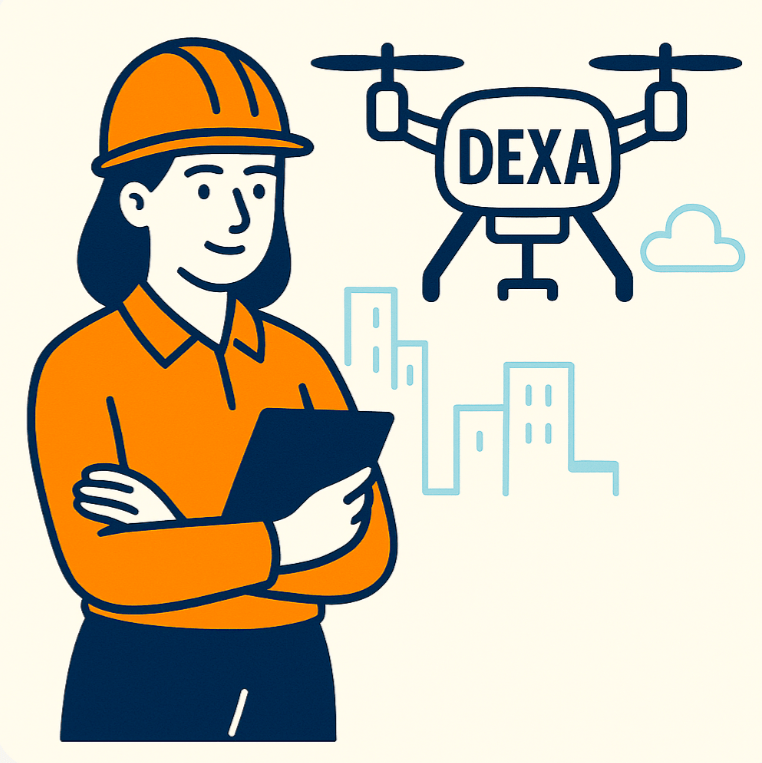
Dexa, formally known as Drone Express, is an emerging U.S. drone‑delivery operator that has rapidly moved into the top tier of the industry. While competitors such as Amazon Prime Air, Alphabet’s Wing, and Zipline have spent years and billions of dollars building their networks, Dexa has taken a leaner path, and achieved the same regulatory milestones.
Dexa holds three critical FAA approvals:
- Airworthiness Certification
- Part 135 Air Carrier Certificate
- A national Beyond Visual Line of Sight (BVLOS) waiver
Together, these approvals allow Dexa to operate autonomous delivery drones commercially across the United States without requiring pilots to maintain visual contact. Only a handful of companies in the country have reached this level of certification.
Ownership and Origins
Dexa is privately owned, led by founder and CEO Beth Flippo. The company originated as a spin‑out from TELEGRID Technologies, a family‑owned defense communications firm known for secure mesh‑networking systems. Flippo, an embedded‑systems engineer, adapted TELEGRID’s communications technology into an aviation‑grade autonomy and control stack, forming the backbone of Dexa’s drone platform.
Unlike many drone startups, Dexa is not venture‑capital dominated. Its ownership remains concentrated within the Flippo family, giving the company unusual strategic independence and the ability to scale without external pressure to chase short‑term returns.
Wonder: A New Model for Multi‑Restaurant Food Delivery
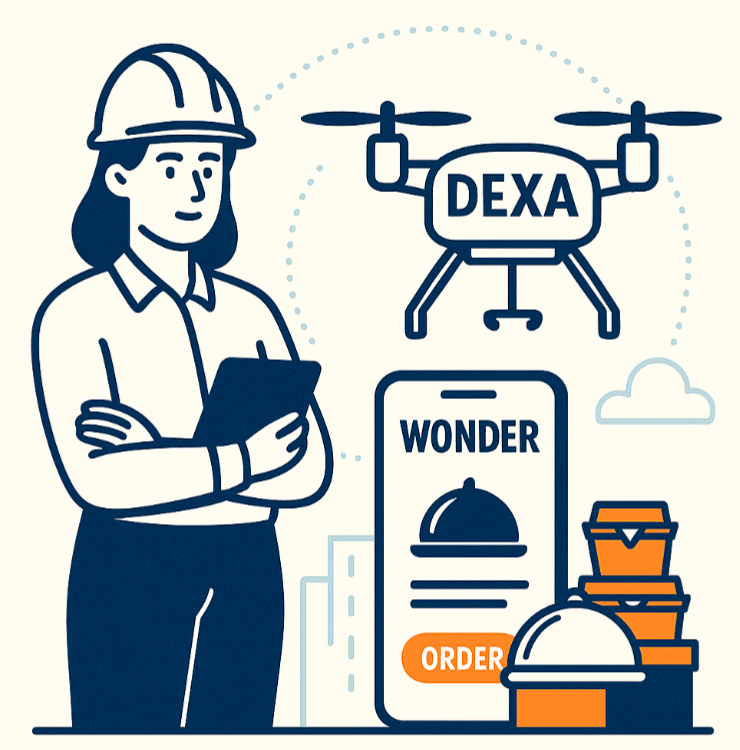
Wonder is a fast‑growing food‑delivery company that operates a multi‑restaurant “mealtime platform.” Instead of relying on individual restaurants scattered across a city, Wonder consolidates dozens of restaurant brands into a single, high‑efficiency kitchen hub. This model allows for:
- Faster preparation
- Higher food quality
- Better packaging consistency
- Streamlined dispatch operations
Wonder controls the entire customer experience:
- Its own menus
- Its own kitchens
- Its own delivery promise
- Its own payment infrastructure
This vertically integrated structure makes Wonder uniquely compatible with drone delivery. With all meals originating from a single, optimized location, drones can be dispatched efficiently without the routing complexity that plagues traditional food‑delivery networks.
How Dexa and Wonder Fit Together
Dexa and Wonder form a natural operational pairing. Wonder provides high‑density, single‑origin meal production, while Dexa provides autonomous last‑mile delivery. The two systems connect through a simple API integration:
- A customer places an order.
- Wonder prepares the meal at its hub.
- Dexa receives order details and verifies packaging and weight.
- Dexa’s DE‑2020 drone launches autonomously.
- The drone delivers the meal via a tether‑lowering system.
This model reduces delivery times, lowers emissions, and eliminates the need for human couriers in low‑density or suburban markets.
The Role of Grubhub — and Why It May Be Temporary
Today, Dexa and Wonder are connected through Grubhub, which serves as the customer‑facing marketplace. Customers order Wonder meals through the Grubhub app and select drone delivery at checkout. Grubhub handles:
- The ordering interface
- Customer support
- Payment processing
- Real‑time tracking
Dexa and Wonder handle the operational work behind the scenes.
Why Grubhub Joined the Partnership
Industry analysts note that Grubhub has been losing market share to DoorDash and Uber Eats. Unlike its competitors, Grubhub lacks a diversified logistics ecosystem, a global mobility platform, or a robust advertising business. Drone delivery offers Grubhub a way to:
- Differentiate itself
- Retain restaurants
- Attract customers
- Signal innovation to investors
For Grubhub, the partnership is widely viewed as a strategic necessity rather than a luxury.
Why Grubhub’s Role May Not Last
Neither Dexa nor Wonder is structurally dependent on Grubhub. Dexa can integrate with any ordering platform or operate its own. Wonder already controls its own app, payment rails, and customer accounts.
As Wonder continues to scale its kitchen‑hub model and as Dexa expands its BVLOS‑enabled delivery network, the most efficient long‑term architecture is a direct Wonder → Dexa integration, without a marketplace intermediary.
Removing Grubhub would give Wonder:
- Better margins
- Full control of the customer experience
- Ownership of delivery data
- A unified brand experience
And Dexa would gain:
- A stable, high‑density partner
- A predictable flight‑volume environment
- A cleaner operational workflow
For Grubhub, this possibility underscores the precariousness of its position. The company benefits from the partnership today, but the long‑term trajectory of drone‑enabled delivery suggests that marketplaces may become optional rather than essential.
Dexa and Wonder represent two converging trends in modern logistics:
– Autonomous last‑mile delivery
– Centralized, multi‑restaurant food production
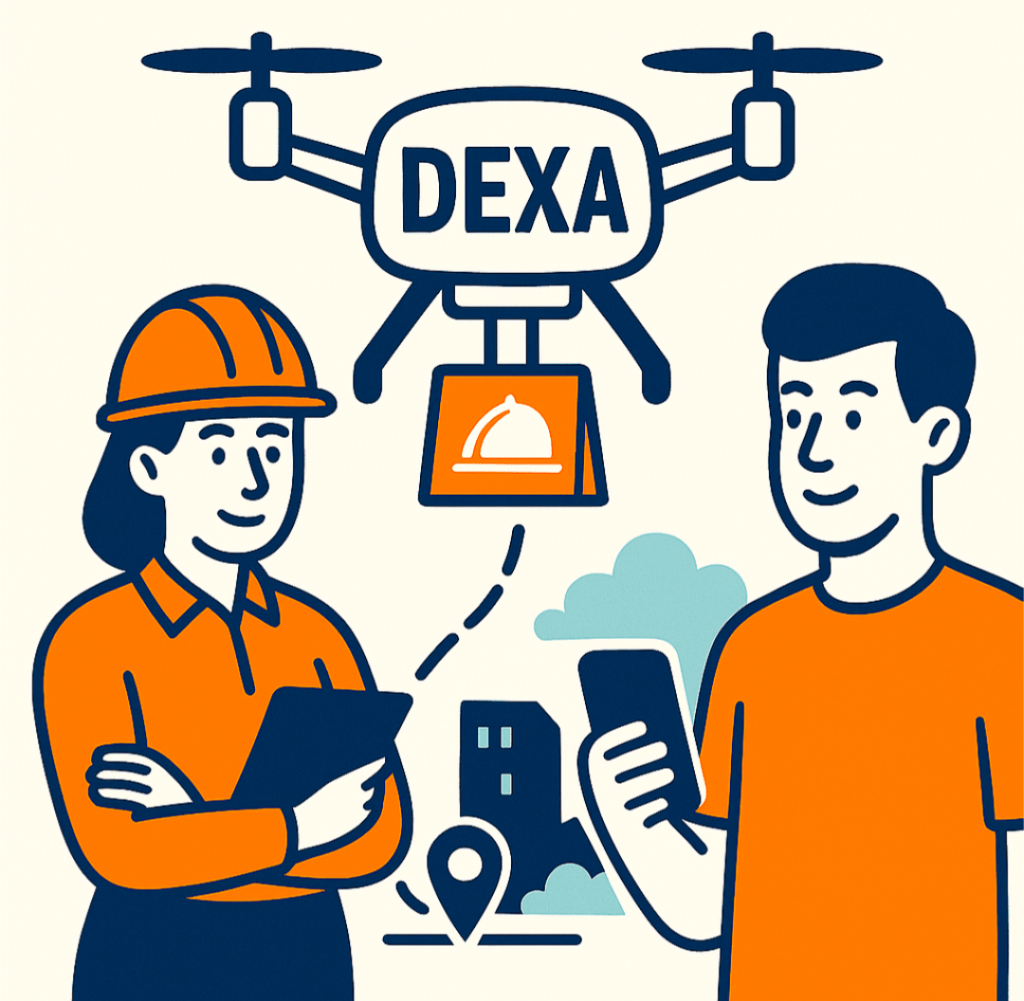
Their partnership, currently routed through Grubhub, demonstrates how drone delivery can be deployed at scale in real‑world environments. But the underlying technology and business models point toward a future where Wonder and Dexa operate directly, with Grubhub’s role diminishing as the ecosystem matures.
For now, Grubhub gains relevance through innovation it did not have to build. But the writing on the wall is clear: as drone delivery becomes more integrated and more autonomous, the middleman may become optional.
 Mavrik Concepts