
As humanity reaches for the stars, the quest for sustainable space food systems becomes paramount. The journey to celestial bodies like the Moon and Mars hinges on our ability to provide astronauts with food that is not only safe and nutritious but also capable of withstanding the rigors of space travel. The following feature delves into the innovative strides being made in space food research, highlighting the collaborative efforts and technological advancements that are shaping the future of human space exploration.
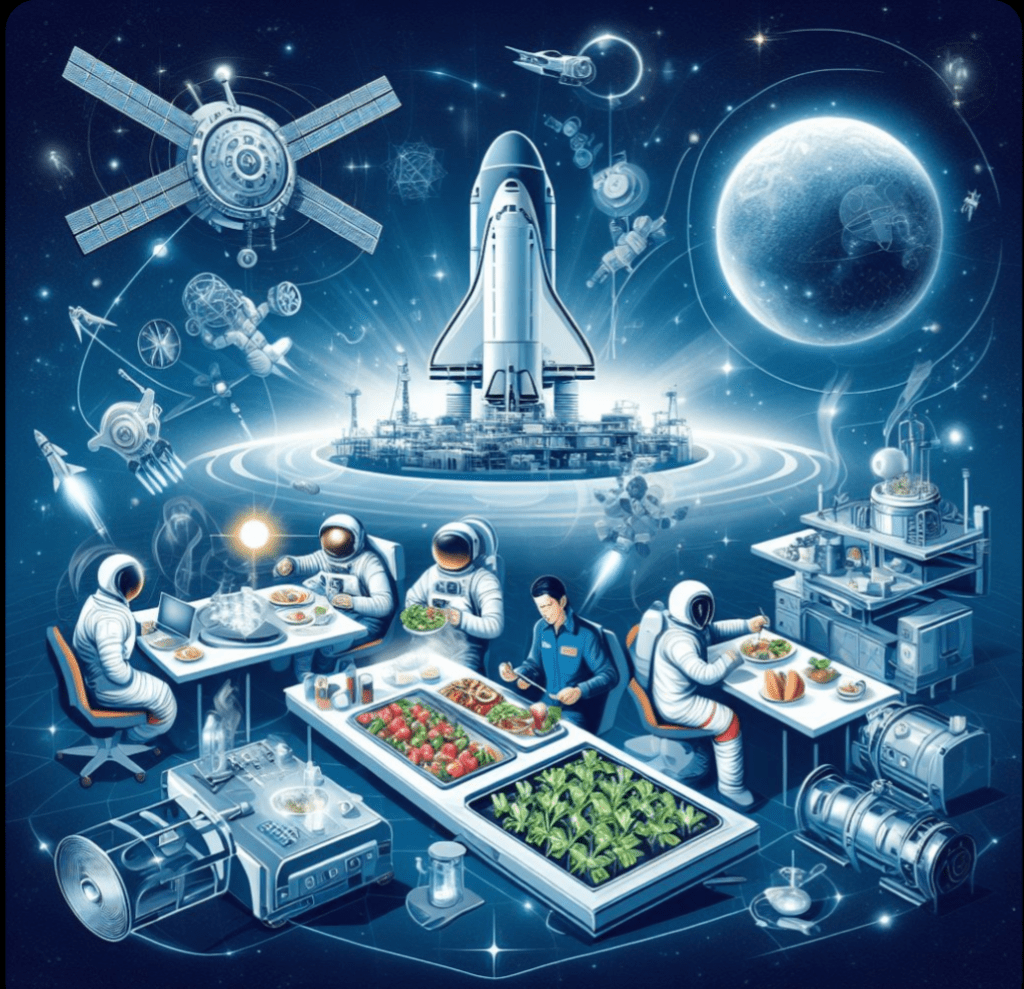
Nourishment Beyond Earth: The Evolution of Space Food Systems
Space exploration has always been as much about survival as it is about discovery. The unique dietary needs of astronauts in the microgravity environment of space require food preservation techniques that extend shelf life and prevent spoilage. Methods such as freeze-drying, vacuum-sealing, and radiation are critical for ensuring food safety during long-duration missions where resupply is not an option.
NASA’s Pioneering Efforts in Astronaut Cuisine
NASA’s role in developing space food systems is unparalleled. From the early days of spaceflight, NASA has been instrumental in ensuring that astronauts enjoy meals that are safe, nutritious, and palatable. Their work in food preservation and nutritional planning is tailored to meet the challenges of space travel, resulting in significant advancements in food technology.
Innovative Companies Fueling Space Food Research
Companies like Induction Food Systems (IFS) are at the forefront of pioneering food preservation technologies essential for space missions. IFS’s induction heating technology enhances food processing safety and efficiency, ensuring sustainable food supplies for astronauts. Other companies contribute their expertise in areas like pulsed electric fields and high-pressure processing, improving food safety and shelf life.
The Circular Approach: Sustainable Food Systems for Space and Earth
The technology developed for space missions offers insights into creating sustainable food systems on Earth. Techniques from precision agriculture to innovative preservation methods can enhance food security and reduce waste. The adoption of closed-loop processes promises to create resilient agricultural practices in both space habitats and urban environments.
Collaborative Ventures in Space Food Innovation
Collaboration is key to advancing space food research. Get Space Food emphasizes the importance of partnerships across various sectors, combining expertise to innovate in food production, nutrition, and safety. Collaborations between NASA and companies like SpaceX have led to advancements in hydroponic systems aboard the ISS, demonstrating the power of joint efforts.
Expert Insights Shaping the Future of Space Nutrition
Experts like Francesco Aimone play a significant role in space food research, advocating for sustainable and nutritious food systems for space missions. Their emphasis on sustainability, nutrition, and efficiency highlights the potential of bioregenerative life support systems and advanced food preservation techniques.
Conclusion: A Unified Vision for Space Food Research
The future of space food research is bright, with the potential to enhance sustainability, nutrition, and efficiency in space food systems. Continued collaboration and innovation are essential for addressing the challenges of space exploration and contributing to the broader goals of human settlement beyond Earth. As we prepare for the next chapter in space exploration, the development of robust space food systems remains a cornerstone of our interstellar ambitions.
Sources
“Raleigh Company Hopes Their Tech Can Preserve Food on the Moon.” CBS17 News.
“Space Food and Space Technology for a Sustainable Food System on Earth.” AMS Institute.
Aimone, Francesco. LinkedIn Profile.
Induction Food Systems. Company LinkedIn Profile.
Induction Food Systems. Official Website.
“Space Food Systems.” NASA.
“Partnership Opportunities.” Get Space Food.
 Mavrik Concepts