
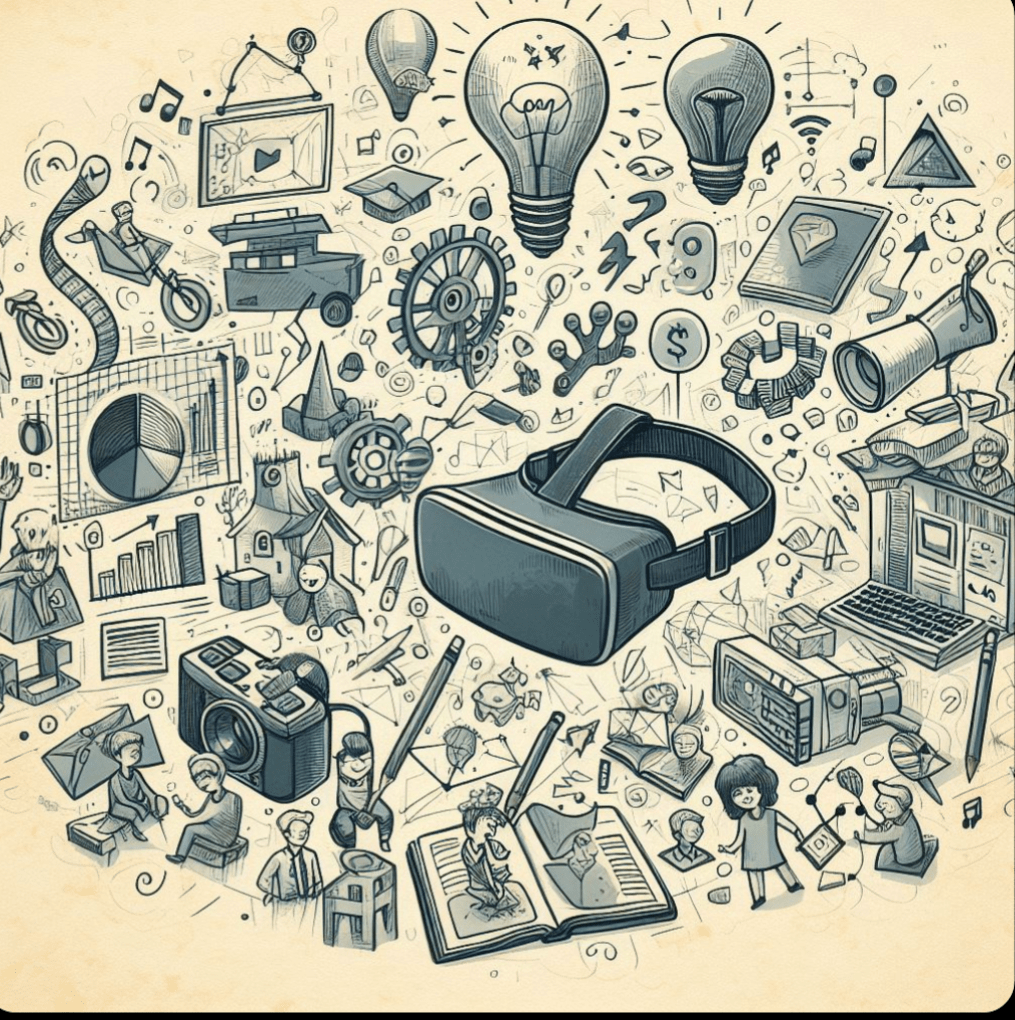
In the ever-evolving landscape of education, virtual reality (VR) and augmented reality (AR) have emerged as powerful tools that can significantly enhance the learning experience for elementary students. These technologies not only revolutionize the way children interact with content but also foster a deeper understanding and retention of knowledge.
Immersive Learning Experiences VR and AR create immersive, interactive environments that captivate young minds. For instance, VR can transport students to ancient civilizations, distant planets, or even inside the human body, providing a visceral understanding of the curriculum that is difficult to achieve through traditional methods. This level of immersion can lead to increased engagement and motivation, making learning an exciting adventure rather than a chore.
Enhancing Creativity and Imagination With VR headsets, children can explore and create in ways that were once unimaginable. They can paint in three-dimensional spaces, design their own virtual worlds, and see their creations come to life. This freedom to create and experiment in a safe, virtual space can lead to significant developments in a child’s creativity and imagination.
Catering to Different Learning Styles Every child learns differently, and VR and AR can cater to that wide range. Visual learners can benefit from the rich, graphical environments, while kinesthetic learners can interact with the virtual world, making learning a hands-on experience. This personalized approach can help ensure that no student is left behind.
Accessibility and Inclusivity AR and VR can be particularly beneficial for students with learning disabilities or those who require special education services. These technologies can provide customized experiences and allow students to learn at their own pace, creating an inclusive environment that respects and accommodates individual needs.
Preparing for the Future As we move towards a more technologically integrated society, familiarity with VR and AR from a young age can prepare students for future careers and challenges. These technologies can help develop problem-solving skills, technological fluency, and adaptability—traits that are essential in the 21st century.
The integration of VR and AR into elementary education offers a myriad of benefits that can transform traditional learning paradigms. By providing immersive, interactive, and personalized learning experiences, these technologies have the potential to inspire a new generation of learners, creators, and innovators. As educators and institutions continue to embrace these tools, we can expect to see a significant shift in how education is delivered and experienced by young students around the world.
Sources
“The Psychology of Play: How VR Technology Shapes Kids’ Imagination and Creativity” – Softplay Blog
“How Can VR Headsets for Kids Enhance Their Learning and Creativity?” – LinkedIn Advice
“Augmented & Virtual Reality: The Future of Learning Experience” – VirtualSpeech Blog
“Virtual Reality in Education: A Tool for Learning in the Experience Age” – NCBI
“VR Kid: The Future of Children’s Interactive Learning” – Kaixr
“The Impact of Virtual Reality on Cognitive Development” – NCBI
“Neural Nets & VR Magic: How Virtual Reality is Changing the Way We Learn” – Hacker Noon
“Virtual Reality is Changing Learning at Home and in School” – Frontier Blog
 Mavrik Concepts